
Last Updated on September 22, 2026 by Helena Akter
Herbal tea and oolong tea often sit next to each other on the shelf, but they are not the same kind of drink.
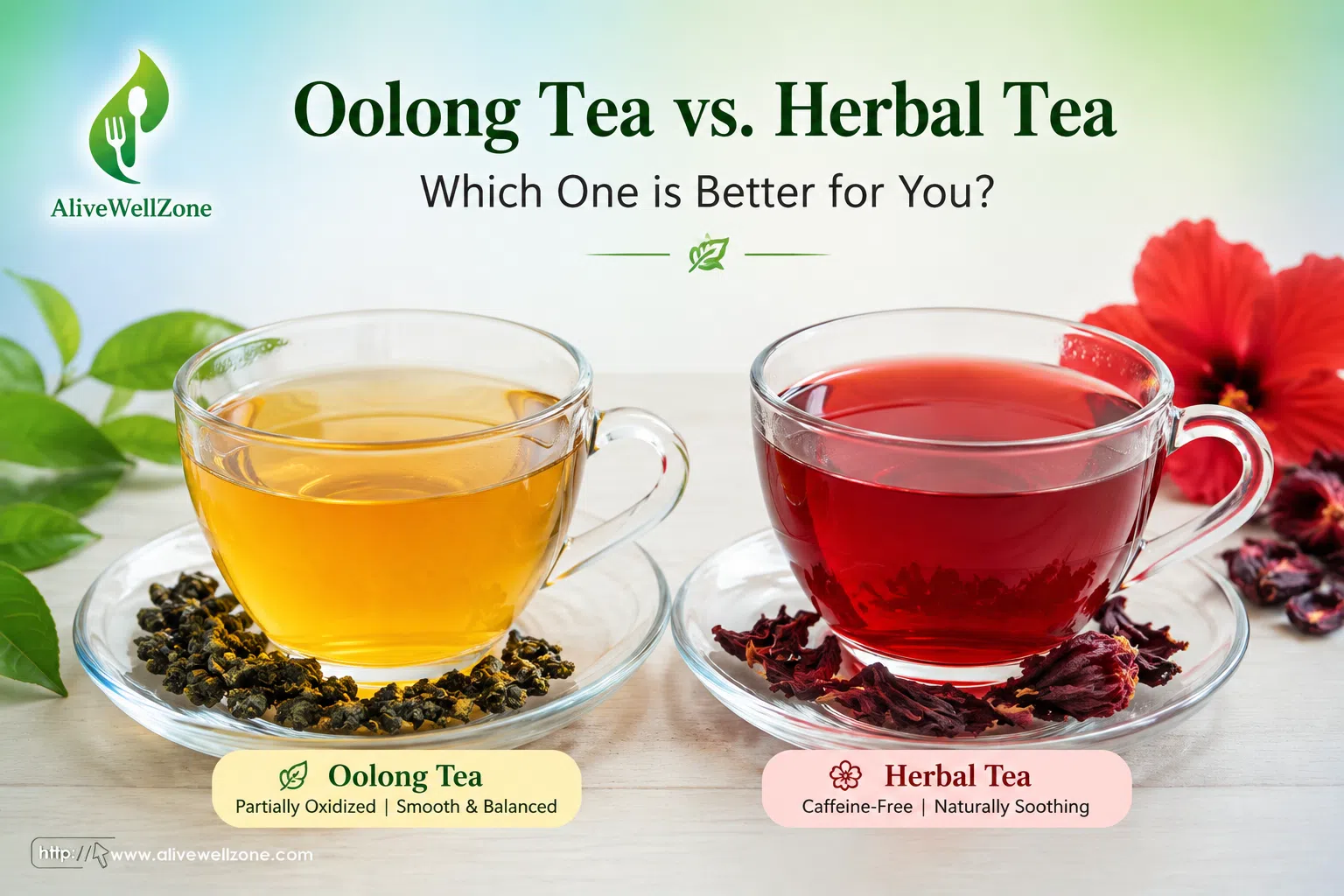
Oolong is a true tea made from the Camellia sinensis plant. It naturally contains caffeine and can taste floral, creamy, fruity, toasted or roasted, depending on how it is made. Herbal tea, also called a tisane, is a much broader category of infusions made from plants such as chamomile, peppermint, hibiscus, rooibos and ginger.
That difference matters. Oolong has a recognizable source and processing method, while the flavor, caffeine and possible effects of an herbal tea depend on the ingredients in the cup.
The quick answer: choose oolong when you want a layered tea flavor and a moderate caffeine lift. Choose a verified caffeine-free herbal infusion when you want to avoid caffeine, especially later in the day. For health-related goals, look at the evidence for the specific herb rather than treating every herbal tea as interchangeable.
Herbal Tea vs Oolong Tea at a Glance
| Feature | Oolong Tea | Herbal Tea |
| Main source | Partially oxidized Camellia sinensis leaves | Flowers, leaves, roots, bark, fruit, seeds or spices |
| Caffeine | Naturally contains caffeine unless decaffeinated | Often caffeine-free, but not always |
| Typical flavor | Floral, creamy, fruity, mineral, toasted or roasted | Minty, tart, spicy, floral, earthy or naturally sweet |
| Best fit | Daytime drinking, layered tea flavor, repeated infusions | Caffeine-free routines, evening drinking, ingredient-specific flavors |
| Brewing | Varies by oolong style, often shorter steeps | Varies by plant part, roots often need longer than leaves or flowers |
| Main limitation | May not suit people who are sensitive to caffeine | Benefits, risks and interactions vary by ingredient |
What Is Oolong Tea?
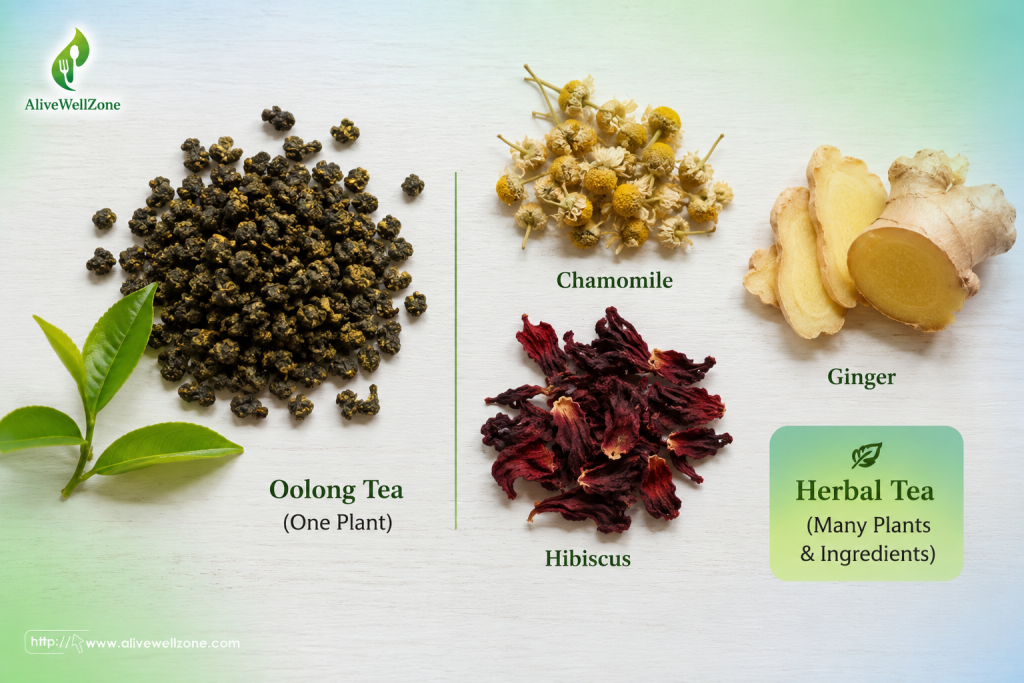
Oolong is made from the leaves of Camellia sinensis. After harvesting, the leaves are withered, handled to encourage controlled oxidation and then heated to stop that process. Producers may also roll, shape, roast or age the leaves.
Oolong is often described as sitting between green and black tea because it is partially oxidized. That is a useful introduction, but it does not mean every oolong tastes like a simple mixture of the two. Cultivar, growing region, oxidation, roasting and brewing all influence the final cup.
A lightly oxidized oolong may taste fresh, floral and creamy. A more heavily oxidized or roasted style may taste nutty, honeyed, woody or toasted. This range is one reason oolong appeals to people who enjoy exploring tea rather than drinking the same flavor every day.
What Counts as Herbal Tea?
Herbal tea is an infusion made without Camellia sinensis. Common examples include chamomile flowers, peppermint leaves, hibiscus calyces, ginger rhizome, rooibos leaves and stems, cinnamon bark, and rose hips, dried fruit or spice blends. For a fuller rundown of common options, see our list of herbal teas and their benefits.
Because those ingredients are chemically and botanically different, questions such as “Is herbal tea good for sleep?” or “Does herbal tea have caffeine?” cannot be answered with one universal claim.
There is another detail worth checking. A product marketed as an herbal blend can still contain green tea, black tea, oolong, yerba mate or another caffeinated ingredient. The front of the box may emphasize herbs, while the full ingredient list tells you whether the drink is actually caffeine-free.
Which One Has More Caffeine?
A standard oolong will have more caffeine than a genuinely caffeine-free herbal infusion. The difficult part is assigning one exact number to every cup.
Studies of commercial teas show substantial variation in caffeine content, even within the same tea category. Leaf quantity, cultivar, particle size, water temperature, brewing time and whether the product is loose-leaf or bagged can all change how much caffeine reaches the cup. [1][2]
For that reason, a number printed in a general tea guide should be treated as an estimate rather than a guarantee. A large mug brewed with extra leaves for a long time may contain considerably more caffeine than a small, lightly brewed cup.
Many familiar herbal infusions, including plain chamomile, peppermint, hibiscus and rooibos, are naturally caffeine-free. However, yerba mate and guayusa naturally contain caffeine, while guarana is sometimes added to energizing herbal blends. Blends can also include ordinary tea leaves.
If you are strictly limiting caffeine, check the ingredients and any caffeine statement on the package instead of relying only on the words “herbal tea.” We break down exact ranges by ingredient in our guide to how much caffeine herbal tea has.
For general context, the US Food and Drug Administration cites 400 milligrams per day as an amount not generally associated with negative effects for most adults. It is not a target, and individual sensitivity can vary widely. Pregnancy, certain health conditions and some medications can change what is appropriate. [3]
How Do They Taste?
Oolong offers a broad but recognizable tea experience. Lighter styles may be floral, silky and gently sweet, sometimes with orchid or stone-fruit notes. Roasted oolongs can be deeper and warmer, with flavors that suggest toasted grain, nuts, caramel or wood.
Herbal tea has no single flavor because it reflects the plant being brewed. Chamomile is soft, floral and slightly apple-like. Peppermint is cooling, fresh and sharp. Hibiscus is bright, tart and cranberry-like. Rooibos is smooth, earthy and naturally sweet. Ginger is warming, spicy and pungent. Yerba mate is grassy, bitter and robust.
Choose oolong when you want the complexity of processed tea leaves. Choose an herbal infusion when a particular botanical flavor sounds more appealing.
Health Benefits: What Does the Evidence Actually Show?
Tea marketing often turns early research into firm promises. A more useful approach is to ask three questions. Was the research conducted in people? Did it test a normal brewed drink or a concentrated extract? Was the study large and long enough to support the claim?
For a broader look at what the evidence supports across the herbal category, see our 8 health benefits of herbal tea.
Oolong and weight-related claims
Oolong contains caffeine and polyphenols, and researchers have studied its effects on energy use and fat oxidation. In one randomized crossover trial, 12 non-obese men consumed standardized oolong drinks during a 14-day study period. The researchers observed increased fat oxidation, but the trial did not show that an ordinary cup of oolong produces meaningful long-term weight loss. [4]
That makes “oolong may influence short-term fat oxidation” more accurate than “oolong burns fat” or “oolong causes weight loss.”
Chamomile and sleep
Chamomile is a popular caffeine-free evening drink, and the ritual of a warm cup may feel relaxing. However, the National Center for Complementary and Integrative Health says there is very little reliable information about chamomile for insomnia. A review it cites found one insomnia study that did not show a benefit. [5]
It is reasonable to choose chamomile as a caffeine-free bedtime beverage. It is not reasonable to present it as a proven treatment for insomnia.
Ginger and nausea
Ginger has been researched for nausea, particularly nausea and vomiting associated with pregnancy. NCCIH notes that much of this research used dietary supplements rather than brewed ginger tea. [6]
A ginger infusion may be an enjoyable option, but findings from standardized capsules or extracts should not automatically be treated as proof that every homemade cup has the same effect.
Peppermint and digestion
Peppermint is commonly associated with digestive comfort, but the strongest evidence is for enteric-coated peppermint oil capsules in adults with irritable bowel syndrome. NCCIH reports that very little research has been conducted on peppermint leaf itself. [7]
This distinction is often missed in tea articles. Peppermint tea and concentrated peppermint oil are not equivalent products.
Hibiscus and blood pressure
Hibiscus has more direct beverage-related research than many herbal ingredients. A systematic review and meta-analysis of controlled trials found reductions in blood pressure, particularly among people whose blood pressure was already elevated. The studies varied considerably, and more research is needed to establish the best dose and duration. [8]
Hibiscus tea should not replace prescribed treatment. Anyone taking blood-pressure medication should discuss regular medicinal use with a healthcare professional.
Which Is Better in the Morning or Before Bed?
Oolong is usually the better morning or early-afternoon choice when you want some caffeine without reaching for coffee. How stimulating it feels will depend on the tea, the brew and your personal sensitivity.
A verified caffeine-free herbal infusion is generally the more practical evening choice. Chamomile and rooibos are popular because they do not naturally contain caffeine, not because either one guarantees better sleep.
If caffeine affects your sleep, pay attention to blends and portion size. A drink labeled “herbal” may still contain mate, guayusa or true tea leaves.
How to Brew Oolong and Herbal Tea
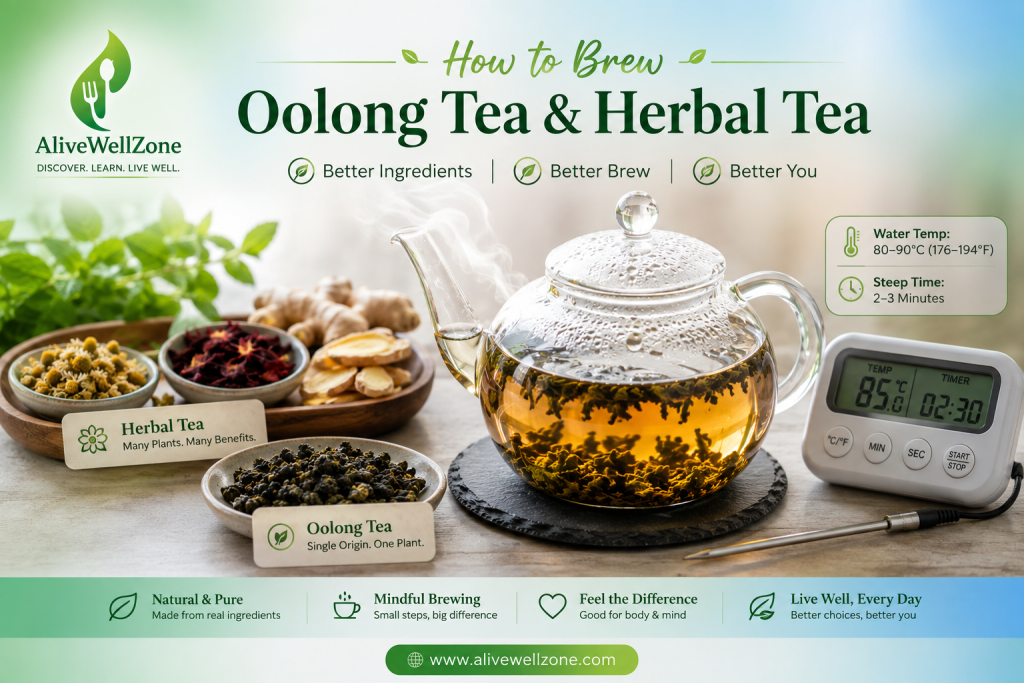
There is no single perfect recipe for every oolong or every herb. Package instructions are the best starting point, especially for blended products.
A practical starting point for oolong
For Western-style brewing, try about 1 teaspoon of loose leaves per 8 ounces of water. Light, floral oolongs often respond well to water around 180°F to 190°F, while darker or roasted styles can usually handle water closer to 195°F to 205°F. Start with a 2 to 4 minute steep and adjust for taste.
Many whole-leaf oolongs can be infused more than once. Later steeps may reveal different aromas and can be extended slightly as the leaves lose strength.
A practical starting point for herbal tea
Most packaged herbal infusions are brewed with near-boiling water for about 5 to 10 minutes. Delicate leaves and flowers may be ready sooner, while dense roots, bark and whole spices often need a longer steep or gentle simmer. Our full how to make herbal tea guide walks through the process step by step.
Covering the cup while it steeps can help retain aroma. For an ingredient-by-ingredient guide, see our herbal tea water temperature guide.
Popular Herbal Teas Compared With Oolong
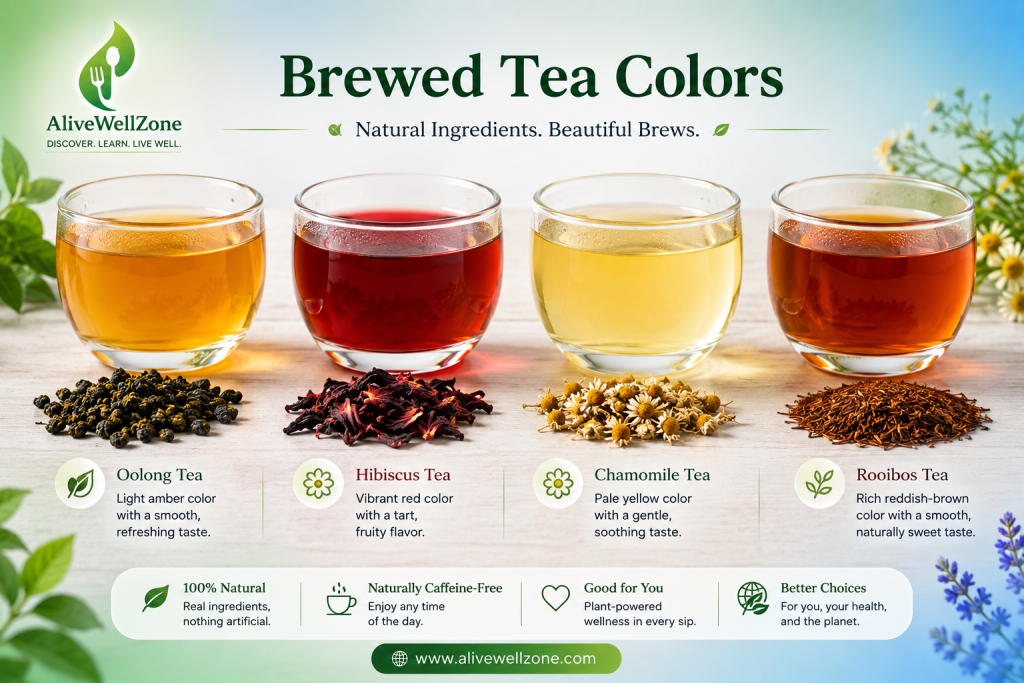
| Drink | Caffeine | Flavor | What to know |
| Chamomile | Naturally caffeine-free | Floral, mild, apple-like | A common evening ritual, but evidence for treating insomnia is limited |
| Peppermint | Naturally caffeine-free | Cooling and minty | Research on peppermint leaf tea is limited; do not equate it with peppermint-oil capsules |
| Hibiscus | Naturally caffeine-free | Tart and fruity | Studied in blood-pressure trials, but not a replacement for medical treatment |
| Rooibos | Naturally caffeine-free | Smooth, earthy and slightly sweet | A useful caffeine-free alternative that can be enjoyed plain or with milk |
| Ginger | Naturally caffeine-free | Warm and spicy | Nausea research often involves supplements rather than ordinary tea |
| Yerba mate | Contains caffeine | Grassy, bitter and robust | Check the product and serving size if you are monitoring caffeine |
| Oolong | Contains caffeine | Floral to roasted | Offers layered flavor and is often suitable for multiple infusions |
Who Should Be Careful?
Caffeine is the main concern with oolong and caffeinated botanical drinks. People who are sensitive to caffeine may experience sleep disruption, nervousness, a fast heartbeat, headaches or stomach discomfort. Decaffeinated products can still contain small amounts.
Herbal does not automatically mean risk-free. Herbs may cause allergic reactions, produce side effects or interact with medicines. NCCIH notes that evidence for many herb-drug interactions is limited or based on indirect data, but extra caution is appropriate with medicines that have a narrow therapeutic range. [9]
Chamomile, for example, is related to ragweed and may trigger reactions in susceptible people. Interactions involving chamomile and warfarin have also been reported, although much of the evidence is based on case reports rather than large clinical trials. [9][10]
Talk with a qualified healthcare professional before using an herbal drink for a medical purpose if you are pregnant, breastfeeding, taking medication, preparing for surgery or managing a health condition. Check the complete ingredient list, especially with multi-herb blends.
Final Verdict
There is no universal winner in the herbal tea vs oolong tea comparison.
Oolong is one defined category of true tea. It contains caffeine, offers a wide range of flavors and often rewards careful brewing and repeated infusions. Herbal tea is a collection of very different plant drinks. Some are caffeine-free, some are not, and their possible benefits and risks depend on the exact ingredients.
Choose oolong for daytime energy and layered tea flavor. Choose a verified caffeine-free herbal infusion when avoiding caffeine matters more. When a health claim influences your decision, look beyond the category name and check whether the evidence applies to the actual ingredient and form you plan to drink.
If you are also weighing herbal tea against other true teas, our comparisons of herbal tea vs black tea and herbal tea vs green tea cover the same caffeine-and-evidence approach used here.
Frequently Asked Questions
Is oolong tea considered herbal tea?
No. Oolong is made from Camellia sinensis, the tea plant. Herbal teas are infusions made from other plants, such as chamomile, mint, hibiscus, rooibos or ginger.
Does herbal tea have caffeine?
Many single-ingredient herbal infusions are naturally caffeine-free, but the category has exceptions. Yerba mate and guayusa contain caffeine, guarana may be added to blends, and some herbal blends include green, black or oolong tea. Check the ingredient list when avoiding caffeine strictly.
Is oolong tea better than herbal tea?
Neither is better for everyone. Oolong is a stronger fit for people who want caffeine and complex tea flavor. A caffeine-free herbal infusion is a better fit for people avoiding caffeine or looking for a particular botanical flavor.
Which is better before bed?
Generally, yes. Many people drink oolong earlier in the day and switch to a caffeine-free herbal infusion later. Consider your total caffeine intake, medication use and individual reactions to the ingredients.
Does oolong tea help with weight loss?
Small studies suggest that standardized oolong drinks may affect short-term fat oxidation, but this is not the same as proving meaningful weight loss. Oolong should not be marketed as a stand-alone weight-loss solution.
Which tea is gentler on the stomach?
There is no universal answer. Caffeine can bother some people, while ginger may cause heartburn or stomach discomfort in others. Peppermint-oil products may worsen reflux, and research on peppermint leaf tea is limited. Start with a mild brew and pay attention to how your body responds.
Can an herbal blend contain real tea leaves?
Yes. Some blends combine herbs, fruit or spices with green, black, white or oolong tea. Those products are not caffeine-free unless the label specifically says so.
References
- Boros K, Jedlinszki N, Csupor D. Theanine and Caffeine Content of Infusions Prepared from Commercial Tea Samples. Pharmacognosy Magazine. 2016.
- Determination of L-Theanine and Caffeine Contents in Tea Infusions with Different Fermentation Degrees and Brewing Conditions Using the Chromatographic Method. 2025.
- US Food and Drug Administration. Spilling the Beans: How Much Caffeine Is Too Much?.
- Abe T, et al. Subacute Ingestion of Caffeine and Oolong Tea Increases Fat Oxidation without Affecting Energy Expenditure and Sleep Architecture. Nutrients. 2020.
- National Center for Complementary and Integrative Health. Chamomile: Usefulness and Safety.
- National Center for Complementary and Integrative Health. Ginger: Usefulness and Safety.
- National Center for Complementary and Integrative Health. Peppermint Oil: Usefulness and Safety.
- Ellis LR, et al. A Systematic Review and Meta-Analysis of the Effects of Hibiscus sabdariffa on Blood Pressure and Cardiometabolic Markers. Nutrition Reviews. 2022.
- National Center for Complementary and Integrative Health. Herb-Drug Interactions.
- Tan CSS, Lee SWH. Warfarin and Food, Herbal or Dietary Supplement Interactions: A Systematic Review. British Journal of Clinical Pharmacology. 2021.
This article is for general educational purposes and is not a substitute for medical advice, diagnosis or treatment.